Introduction
Launched in 2024, the Daara Development Academy is a co-created initiative designed to strengthen the capacity of African organizations to scale evidence-based solutions for foundational learning. An important component of this program was an Innovation Fund, intended to support collaborative projects between Daara partners that address sector needs to improve foundational learning outcomes. Projects could include the development of approaches, tools, and resources that align good practice within the Cohort with the science of teaching principles.
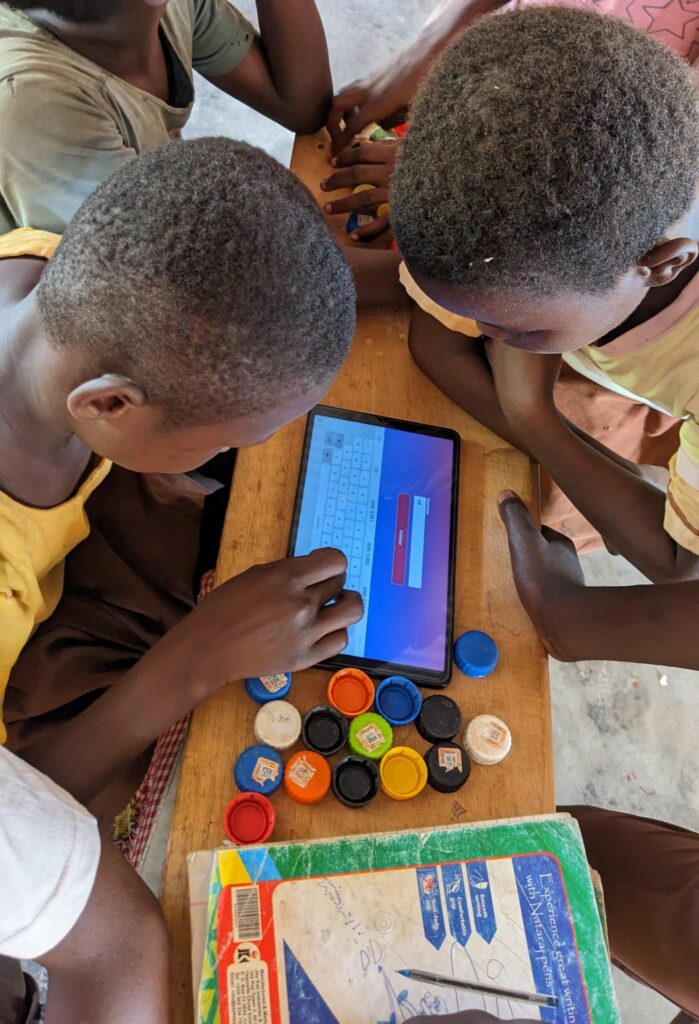
The AI Teachers project was awarded funding through this Fund and was piloted in Ghana and Tanzania to explore how AI-powered digital platforms can enhance teacher competencies and improve student learning outcomes in numeracy. The initiative aimed to provide teachers with real-time data on their students’ learning and differentiated instructional support aligned to national curricula. Implementation was led by consortium lead Shule Direct in Tanzania, with implementation support by Lead for Ghana in Ghana. eBASE Africa ensured the monitoring and evaluation of the project across both countries.
Overview of the project
Foundational learning in Africa faces a severe crisis, with alarming data indicating that at most one in five children acquire basic reading and mathematics skills by the end of primary school. Government data from Ghana and Tanzania echoes this, revealing that only 31% of Tanzanian Class 3 students can solve Class 2 multiplication problems, and less than 40% of Ghanaian primary students achieve math proficiency, hindering their academic journey. This crisis is fuelled by large classes, a lack of qualified teachers, outdated teaching methods, and limited access to up-to-date resources, especially in rural and underserved areas. Recognizing AI’s potential to address many of these challenges through individualized learning, teacher support, assessment-informed instruction, and accessibility, the consortium developed and piloted an AI-powered, data-driven platform. This platform supported teachers by providing real-time student assessments, resources to enhance their instruction, and AI-generated insights. The “AI Teachers: improving teachers’ competencies through an AI-driven assessment program” initiative aims to empower teachers with differentiated instruction and assessment tools, ultimately improving numeracy skills for learners in Ghana and Tanzania. Through structured workshops, coaching, and feedback sessions, the AI-powered platform provided essential support to teachers, boosting student engagement and performance.
Brief overview of the evaluation approach
The evaluation of this pilot project employed a mixed-methods design to assess the executability of the intervention, improvements in teacher capacity, uptake and maintenance of evidence-based practices, and early indicators of student learning as a proof of concept. The pilot study was conducted across 14 schools in Ghana and Tanzania, involving a total of 36 teachers and 400 learners. In Ghana, the study focused on Grade 3 classrooms in nine schools across three regions, engaging 16 teachers and 185 learners. In Tanzania, the study targeted Grade 1 and 2 classrooms in five schools, involving 20 teachers and 215 learners. The selection process in both countries aimed to ensure a diverse representation of educational settings, with a shared emphasis on classrooms where foundational numeracy skills are most critical. Quantitative tools included EGMA-aligned learner assessments, JBI audit checklists, and TAM-informed teacher surveys. Qualitative insights were gathered via key informant interviews, classroom observations, and reflective logs. Endline data were compared with baseline to assess changes in teaching behaviour, AI adoption, and student numeracy performance.
The program garnered significant endorsement from the government, evidenced in Tanzania by the active involvement of regional and national education officers who subsequently requested teacher capacity building and invited the program to inform the National education teaching strategy.
Overview of the findings
Project Executability
In Ghana, 93% of teachers were using the platform daily by the endline, up from 75% who initially planned to use it daily. In Tanzania, teacher usage of AI tools increased from 30% at baseline to 85% at endline, showing strong uptake despite infrastructure challenges such as limited devices and intermittent internet access. Teachers described the platform as user-friendly and motivating: “The more I used the App, the easier it became to plan and deliver my lessons,” said a Ghanaian teacher.
In Ghana, teacher compliance with best practices improved from 80% at baseline to 88% at endline. In Tanzania, compliance rose from 85% to 90%. Teachers grew more confident in using AI, with 71% of Ghanaian teachers reporting they felt “very comfortable” using the platform by endline, up from 44% at baseline. A Tanzanian teacher said, “I now check student performance daily and ask myself whether the teaching methods I used were effective”. These quotes reflect a shift in teacher behaviour toward more data-informed and responsive instruction.
Learning outcomes improved in both countries. In Ghana, average learner scores increased from 62% at baseline to 76% at endline. The proportion of students in the “Poor” performance category halved from 22% to 11%, while those rated “Excellent” rose from 34% to 43%. In Tanzania, the number of learners in the “Poor” and “Below Average” categories dropped to zero, while the proportion rated “Good” more than doubled from 7% to 15%, and “Excellent” rose from 82% to 85%. “Students who previously struggled to recognize numbers can now confidently identify and differentiate them,” said a Tanzanian teacher.
Both studies faced notable limitations that must be considered when scaling. Infrastructure challenges, such as poor internet and limited devices constrained the implementation. Teachers’ unfamiliarity with AI, delays in app deployment, and fixed, non-adaptive content design also limited personalized learning and reduced the accuracy of learner performance data.
Case for follow-up and scale
This project successfully developed and tested a minimum viable product (the AI-powered platform), demonstrating strong feasibility, high acceptability among teachers, and clear shifts in instructional behaviour across diverse classroom contexts. The positive results signal a unique opportunity to invest in the development of a more complete, contextually relevant AI tool, tailored to the realities of Africa’s low-resource settings.
Read the full report Here
 English
  French