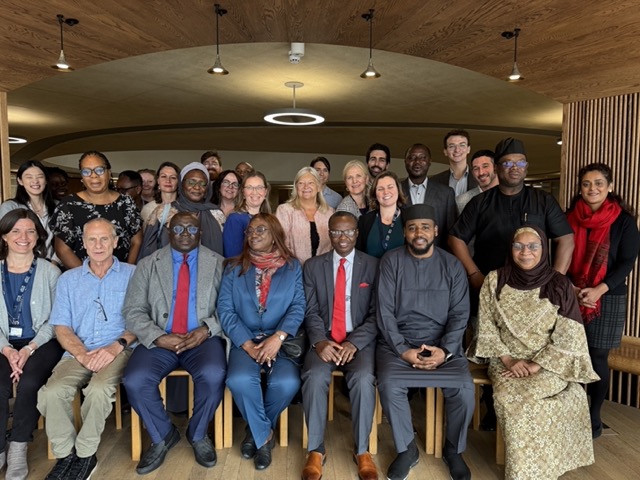
The Quality Education Development Associates (QEDA) Team Lead/Founder Nurudeen Lawal, joined other 700 education sector delegates from across the globe at UKFIET2025 conference. This biennial conference was held in Oxford University from the 16th -18th of September 2025 with the theme; Mobilising knowledge, partnerships, and innovations for sustainable development through education and training. The conference had African governments and funders participation (Including Gates Foundation). It was an opportunity for QEDA to deepen ties with other DAARA members; TaRL Africa and Zizi Afrique, who were also represented by their leadership. The presentation started with two complimentary presentations on the state of education in an era of uncertainty from populism. Presentation of interest includes, the Gates Foundation co-organized symposium on African government’s progress on foundational learning, and the sessions on teachers’ agency a middle-tier effectiveness. The session on The Demise of International Education Development: three scenarios for reincarnation, tested some potential scenarios for the future of international education development with an audience of constructive and critical stakeholders, which generated insights, discussions and debates. QEDA and TaRL Africa were also part of a side event to the UKFIET on quality education access for out of school children in Nigeria. This took place on the 15th of September 2025 at the Blavatnik School Government and was organised by; FCDO Partnership for Learning for All in Nigeria’s Education (PLANE) and What Works Hub in Global Education (WWHGE), while Blavatnik School of Government was the host. Presenters were policy leads from Nigeria’s Federal Ministry of Education (FME), Universal Basic Education Commission (UBEC), and National Commission for Almajiri and OOSC Education (NCAOOSCE). Discussants to the presentations include; Hafsatu Hamza (TaRL), Nurudeen Lawal (QEDA), and Heather Kayton, (BSG) and Masooda Bano (Oxford Department of International Development).
Oct
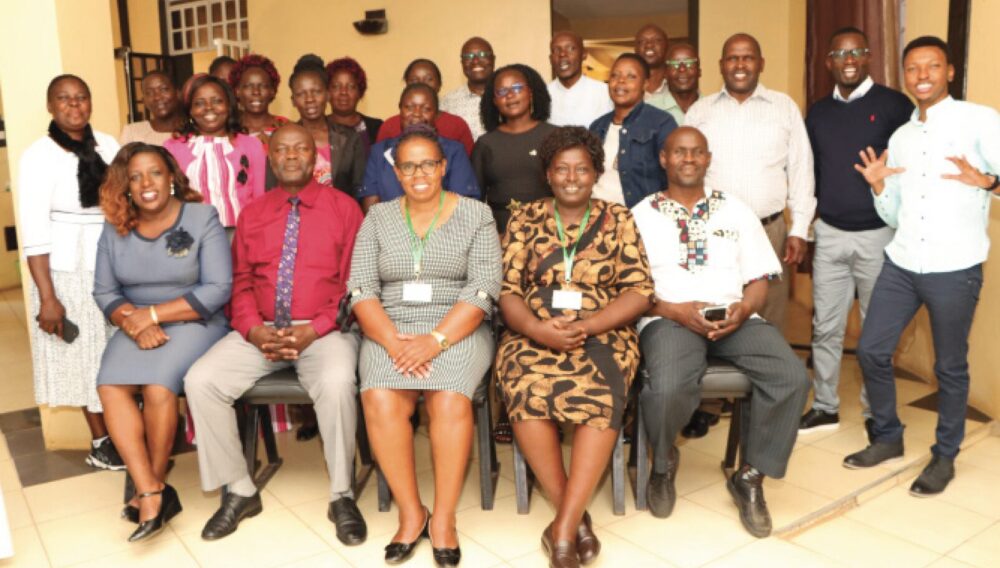
Zizi Afrique’s work on strengthening foundational learning, while working closely with Government and ecosystem partners continues to grow. A recent breakthrough is the finalization of a numeracy improvement roadmap for Kenya for the next 10 years! Bringing together 54 ecosystem partners, for 11 days and over 100 hours of brainstorm, co-creation and prioritisation, the Ministry of Education-led workshops culminated in a four pillar strategy to improve numeracy outcomes in Kenya: quality teaching and learning materials; continuous teacher capacity development; assessment and data use and an accountability-oriented policy environment. This roadmap will guide Zizi Afrique’s and MoEs efforts towards improving numeracy outcomes for all children in Kenya. This work was seeded through Daara (insert hyperlink of the video I shared for cohort 2). During the innovation phase, Zizi Afrique conducted research with the Center for Mathematics, Science and Technology Education in Africa (CEMASTEA) on misconceptions in foundational numeracy, revealing a huge gap in conceptual mastery and procedural fluency in numeracy in the early grades. Report Download
Oct
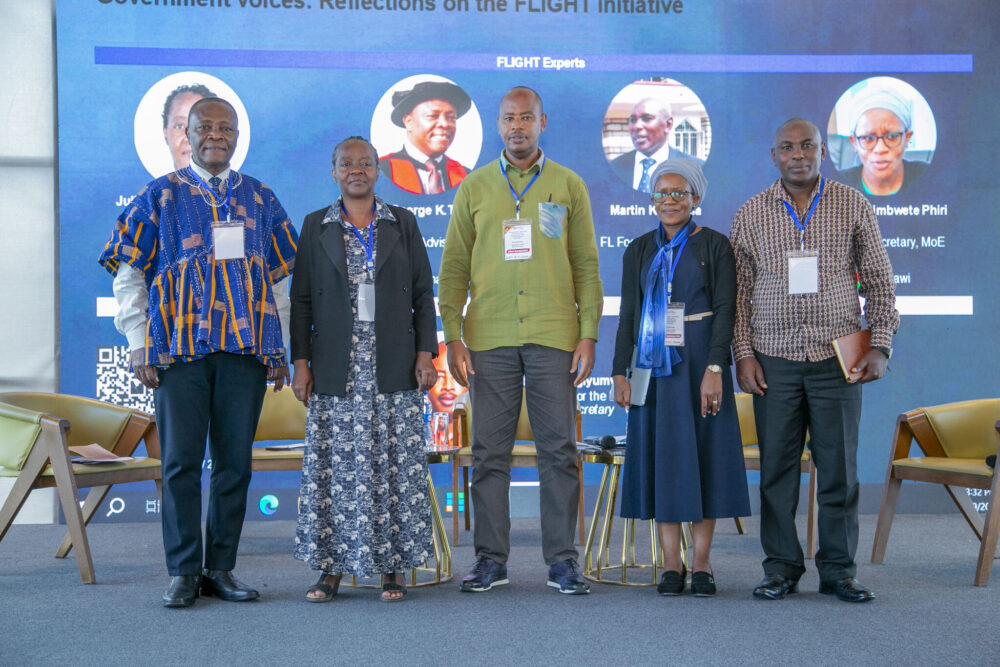
Learning Masterminds recently organized the FLIGHT convening in Nairobi, alongside Haskè Conseil, ADEA, and Human Capital Africa. The Foundational Learning Initiative for Government-led Transformation (FLIGHT) is an effort to place countries at the center of foundational learning reform and ensure alignment with national needs, systems, and structures. Learning Masterminds, in partnership with ADEA and Human Capital Africa, convened key policymakers and representatives from Ghana, Nigeria, Kenya, Namibia, Uganda, Senegal, Malawi, Angola, South Africa, and Madagascar. Congratulations to Learning Masterminds for the great work! Read Full Linked In Article

May
WALEZI WA WATOTO WALEMAVU WAPONGEZWA Walezi wa watoto walemavu wapongezwa. Shirika la Action laanda kongamano hilo. Shirika hilo limewataka walezi hawa kupokea masomo ya ziada ili kuwawezesha kutoa huduma haya bila kutatizika.#TV47Matukio@Kilemi_Andrine pic.twitter.com/5J3klKbDxk — TV47 (@tv47news) July 4, 2024

May
Daniel Dotse, the CEO of Lead for Ghana recently visited our office. In our new podcast series ‘Zizi Sebuleni’, he sat down with our Director of Advocacy and Partnerships to speak about what Lead for Ghana is doing to improve governance and leadership in Africa. Follow the conversation here.
News from Partners
Africans creating African solutions”: Disability inclusion with The Action Foundation
May
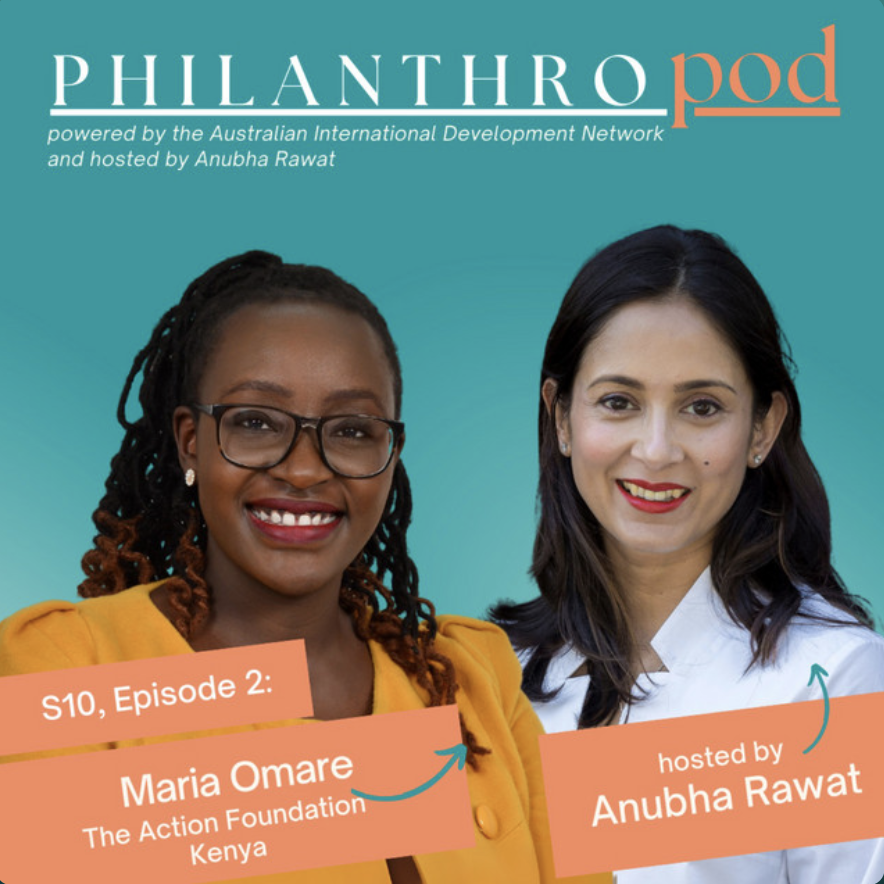
Deeply committed to the philosophy that all children, women and girls with disabilities should have equal opportunities to succeed, our latest episode of Philanthropod features Maria Omare. Maria is a distinguished disability inclusion advocate from Kenya and Executive Director of The Action Foundation. Since her university days, Maria has devoted her career to building inclusive and resilient communities where those with disabilities can access adequate health and education services. Nearly thirteen years ago, Maria set up her first centre in the Kibera slums, serving just a handful of local community members. Today, The Action Foundation focuses on wider systems change, challenging stigmas against disabilities and working with the Kenyan government to ensure that all children with disabilities have access to education and health care at school. Maria has also played a crucial role in various initiatives focused on inclusive education, early childhood care and education, and the sexual and reproductive health rights of women and girls with disabilities. For her exceptional work, Maria has earned numerous prestigious awards, including the Ford Motor Company International Fellowship, Cordes Fellowship, and Michelle Obama’s “Red Magazine UK’s 25 Visionaries to Watch”. To learn more, tune into this episode to hear Philanthropod host, Anubha Rawat, in conversation with Maria. Anubha and Maria take the listeners through the highs and lows of The Action Foundation’s journey, reflect on the importance of finding your “people” in the development sector, and discuss how to ensure service delivery is maximised for all who need it. To end, they also discuss The Action Foundation’s pan-African strategy moving forward. Afterall, as Maria notes, impact will be maximised when it is “Africans creating African solutions”. Listen to Podcast https://open.spotify.com/episode/2KIkcb6qU3KOH3FaeKPgnt Hosted on Acast. See acast.com/privacy for more information.
May
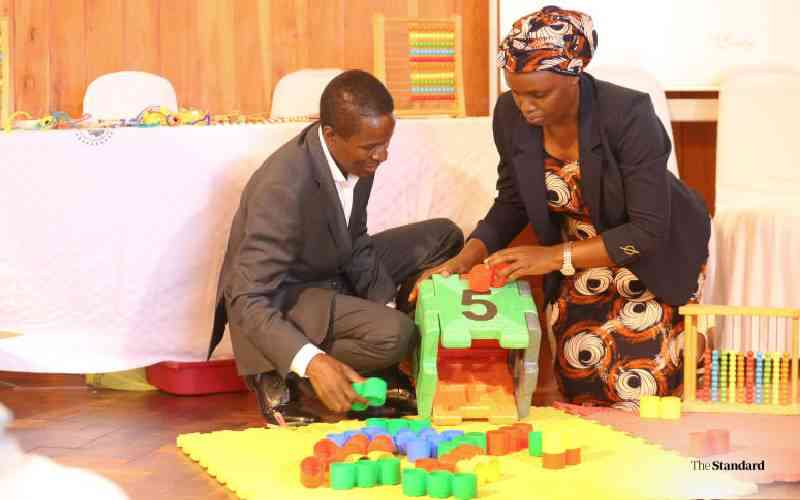
Shocking revelations have emerged that the majority of learners in grade three are struggling with solving simple tasks in mathematics. Studies show that more than 97 percent of students experience difficulty in mastering mathematical skills, while 54 percent struggle with problem-solving. “Only then can we break the cycle of math difficulties and give every student a fair chance to succeed.” Director, Innovations and Practice, at Zizi Afrique Foundation Virginia Ngindiru shows Usawa Agenda Executive Director Dr. Emmanuel Manyasa learning materials during Numeracy Stakeholders Forum hosted by The Centre for Mathematics, Science and Technology Education in Africa (CEMASTEA) and Zizi Afrique Foundation at CEMASTEA, Karen, on February 05, 2025.[Stafford Ondego, Standard] Additionally, research highlights that students who lack practice, receive inadequate instructional support, or have undiagnosed learning disabilities such as dyscalculia face even greater hurdles. Education experts and teachers now warn that early difficulties in mathematics can have long-term consequences if not addressed with the right support. Zizi Afrique Foundation Director Dr John Mugo warns that foundational gaps in math can begin as early as first grade. “If students fail to grasp basic mathematical concepts early on, it places them at a greater risk of academic struggles later in life. These gaps don’t just affect their school performance but also their ability to make informed decisions in adulthood,” Dr Mugo explained. Best online courses According to him, the root of the problem often lies in foundational gaps, language barriers, and mismatched teaching methods. “When a child doesn’t fully understand concepts like place value or fractions, it becomes difficult to progress. Math builds on itself, so missing out on early concepts creates long-term struggles,” he stated. Speaking during a workshop on Foundational Numeracy in Kenya at Centre for Mathematics, Science and Technology Education in Africa, Dr Mugo called for differentiated instruction to accommodate various learning styles. “Some children thrive with hands-on activities, others need repetition, and some benefit from peer learning,” he added. “Recognizing these differences can transform a student’s math experience.” Teachers arrange learning materials during Numeracy Stakeholders Forum hosted by The Centre for Mathematics, Science and Technology Education in Africa (CEMASTEA) and Zizi Afrique Foundation at CEMASTEA, Karen, on February 05, 2025.[Stafford Ondego, Standard] Dr. Emmanuel Manyasa, Director, Usawa Agenda points to a lack of practice and reliance on rote memorization as obstacles to mastering math. “Memorizing formulas without understanding their application makes problem-solving tough. Students need hands-on learning—using real-world examples and manipulatives can make a difference,” said Dr Manyasa. Dr Manyasa recommends breaking down complex math problems into smaller, manageable steps, using real-life examples to make math relatable, and incorporating differentiated instruction to cater to diverse learning styles. “We need to focus on early intervention. Teachers should assess students’ mathematical skills early and frequently. The sooner we identify learning difficulties, the better we can provide tailored support,” emphasized Dr. Manyasa. Perhaps one of the biggest, yet often overlooked, barriers is math anxiety. Dr Manyasa said many children develop a fear of math due to past failures or negative experiences. “A student who believes they’re ‘bad at math’ will struggle even before they start solving a problem. Building confidence is just as important as teaching skills,” he said. Grace Mwathe, Curriculum expert KICD cited language barrier as a major setback in learning. He said many children struggle to decode the language of math problems, especially in settings where English is not their first language. “If they can’t comprehend the wording of a problem, they won’t even get to the numbers. It’s not just a math issue—it’s also a literacy issue,” Mwathe said. She further said the curriculum is designed to take care of foundation skills hence need for effective delivery. “How are the teachers facilitating learning in numeracy and mathematics which is the core. This is before they access and group the errors learners make. Majority of learners are still stuck at single digit level,” she added. A Teacher arrange learning materials during Numeracy Stakeholders Forum hosted by The Centre for Mathematics, Science and Technology Education in Africa (CEMASTEA) and Zizi Afrique Foundation at CEMASTEA, Karen, on February 05, 2025.[Stafford Ondego, Standard] Geoffrey Wanyama, a primary school teacher in Bungoma observed that beyond comprehension challenges, poor visual-spatial skills can hinder problem-solving. Best online courses “Some students find it hard to visualize shapes, patterns, or even the relationships between numbers. For children with dyscalculia, this difficulty is even more pronounced, requiring specialized support,” he explained. Virginia Gindiru, Director Innovations and practice at Zizi Afrique Foundation said that early intervention and tailored teaching methods are key to helping struggling learners. “We need to reinforce foundational skills through interactive and engaging methods. Using visuals, breaking down problems into simpler steps, and making math relatable through real-life scenarios can help,” said Gindiru. According to her cognitive development theory, elementary school children are in the Concrete Operational stage, meaning they learn best through hands-on experiences rather than abstract concepts. “Early detection and intervention are key to ensuring students do not fall through the cracks. By prioritizing foundational math skills and addressing learning challenges head-on, the future of many young learners can be transformed for the better,” she said. Best online courses Maria Omare, Action Foundation insists that parents, school administrators, and education policymakers must work together to create an environment that fosters mathematical literacy. “We need better resources, more training for teachers, and a curriculum that acknowledges the different ways children learn,” said Omare.
 English
  French