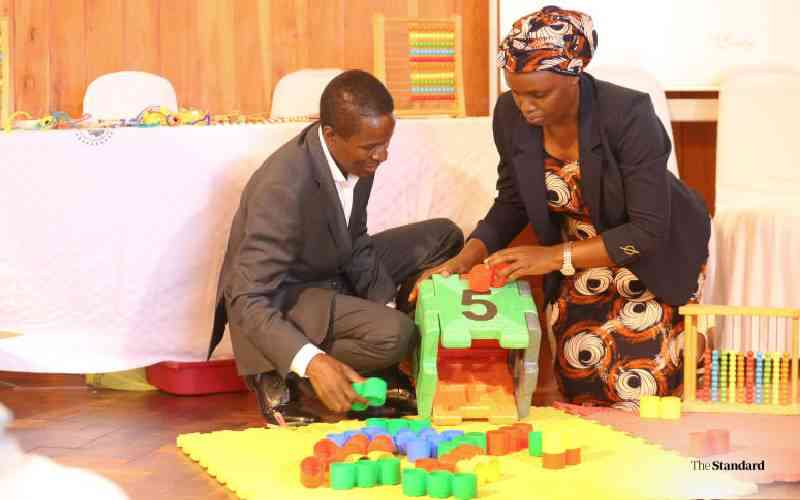
Shocking revelations have emerged that the majority of learners in grade three are struggling with solving simple tasks in mathematics. Studies show that more than 97 percent of students experience difficulty in mastering mathematical skills, while 54 percent struggle with problem-solving. “Only then can we break the cycle of math difficulties and give every student a fair chance to succeed.” Director, Innovations and Practice, at Zizi Afrique Foundation Virginia Ngindiru shows Usawa Agenda Executive Director Dr. Emmanuel Manyasa learning materials during Numeracy Stakeholders Forum hosted by The Centre for Mathematics, Science and Technology Education in Africa (CEMASTEA) and Zizi Afrique Foundation at CEMASTEA, Karen, on February 05, 2025.[Stafford Ondego, Standard] Additionally, research highlights that students who lack practice, receive inadequate instructional support, or have undiagnosed learning disabilities such as dyscalculia face even greater hurdles. Education experts and teachers now warn that early difficulties in mathematics can have long-term consequences if not addressed with the right support. Zizi Afrique Foundation Director Dr John Mugo warns that foundational gaps in math can begin as early as first grade. “If students fail to grasp basic mathematical concepts early on, it places them at a greater risk of academic struggles later in life. These gaps don’t just affect their school performance but also their ability to make informed decisions in adulthood,” Dr Mugo explained. Best online courses According to him, the root of the problem often lies in foundational gaps, language barriers, and mismatched teaching methods. “When a child doesn’t fully understand concepts like place value or fractions, it becomes difficult to progress. Math builds on itself, so missing out on early concepts creates long-term struggles,” he stated. Speaking during a workshop on Foundational Numeracy in Kenya at Centre for Mathematics, Science and Technology Education in Africa, Dr Mugo called for differentiated instruction to accommodate various learning styles. “Some children thrive with hands-on activities, others need repetition, and some benefit from peer learning,” he added. “Recognizing these differences can transform a student’s math experience.” Teachers arrange learning materials during Numeracy Stakeholders Forum hosted by The Centre for Mathematics, Science and Technology Education in Africa (CEMASTEA) and Zizi Afrique Foundation at CEMASTEA, Karen, on February 05, 2025.[Stafford Ondego, Standard] Dr. Emmanuel Manyasa, Director, Usawa Agenda points to a lack of practice and reliance on rote memorization as obstacles to mastering math. “Memorizing formulas without understanding their application makes problem-solving tough. Students need hands-on learning—using real-world examples and manipulatives can make a difference,” said Dr Manyasa. Dr Manyasa recommends breaking down complex math problems into smaller, manageable steps, using real-life examples to make math relatable, and incorporating differentiated instruction to cater to diverse learning styles. “We need to focus on early intervention. Teachers should assess students’ mathematical skills early and frequently. The sooner we identify learning difficulties, the better we can provide tailored support,” emphasized Dr. Manyasa. Perhaps one of the biggest, yet often overlooked, barriers is math anxiety. Dr Manyasa said many children develop a fear of math due to past failures or negative experiences. “A student who believes they’re ‘bad at math’ will struggle even before they start solving a problem. Building confidence is just as important as teaching skills,” he said. Grace Mwathe, Curriculum expert KICD cited language barrier as a major setback in learning. He said many children struggle to decode the language of math problems, especially in settings where English is not their first language. “If they can’t comprehend the wording of a problem, they won’t even get to the numbers. It’s not just a math issue—it’s also a literacy issue,” Mwathe said. She further said the curriculum is designed to take care of foundation skills hence need for effective delivery. “How are the teachers facilitating learning in numeracy and mathematics which is the core. This is before they access and group the errors learners make. Majority of learners are still stuck at single digit level,” she added. A Teacher arrange learning materials during Numeracy Stakeholders Forum hosted by The Centre for Mathematics, Science and Technology Education in Africa (CEMASTEA) and Zizi Afrique Foundation at CEMASTEA, Karen, on February 05, 2025.[Stafford Ondego, Standard] Geoffrey Wanyama, a primary school teacher in Bungoma observed that beyond comprehension challenges, poor visual-spatial skills can hinder problem-solving. Best online courses “Some students find it hard to visualize shapes, patterns, or even the relationships between numbers. For children with dyscalculia, this difficulty is even more pronounced, requiring specialized support,” he explained. Virginia Gindiru, Director Innovations and practice at Zizi Afrique Foundation said that early intervention and tailored teaching methods are key to helping struggling learners. “We need to reinforce foundational skills through interactive and engaging methods. Using visuals, breaking down problems into simpler steps, and making math relatable through real-life scenarios can help,” said Gindiru. According to her cognitive development theory, elementary school children are in the Concrete Operational stage, meaning they learn best through hands-on experiences rather than abstract concepts. “Early detection and intervention are key to ensuring students do not fall through the cracks. By prioritizing foundational math skills and addressing learning challenges head-on, the future of many young learners can be transformed for the better,” she said. Best online courses Maria Omare, Action Foundation insists that parents, school administrators, and education policymakers must work together to create an environment that fosters mathematical literacy. “We need better resources, more training for teachers, and a curriculum that acknowledges the different ways children learn,” said Omare.
News From Daara
What happens when African-rooted organisations come together to co-create solutions for foundational learning?
May
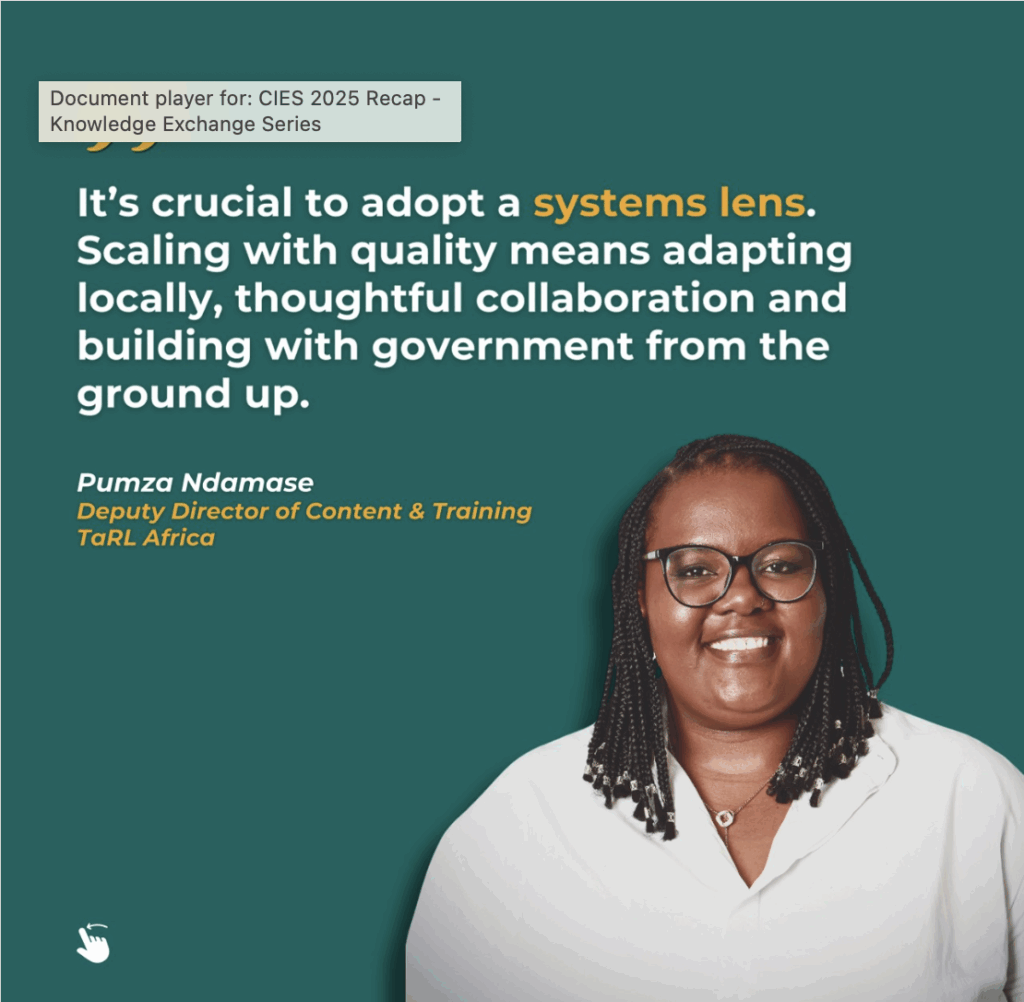
What happens when African-rooted organisations come together to co-create solutions for foundational learning? At hashtag#CIES2025, Pumza Ndamase shared reflections from an ongoing knowledge exchange between TaRL Africa, ARED, and Funda Wande – a collaboration spanning Nigeria, Côte d’Ivoire, Senegal, and South Africa. Together, we are learning what it really takes to localize instruction, strengthen teacher support, and scale with quality. The partnership centers African-grown innovations – from bilingual teaching practices to the use of low-cost, locally made materials, and tackles persistent challenges like large class sizes and absenteeism. Swipe to explore the insights and lessons from this cross-country exchange. This learning exchange was facilitated by an innovation grant for Daara Development Academy members, funded by the Gates Foundation. hashtag#FoundationalLearning hashtag#TaRLAfrica hashtag#CIES2025 hashtag#EducationInnovation hashtag#TeacherSupport hashtag#FLNAfrica Source: https://www.linkedin.com/posts/tarl-africa_cies-2025-recap-knowledge-exchange-series-activity-7317901097325465600-9Vwy/
Feb
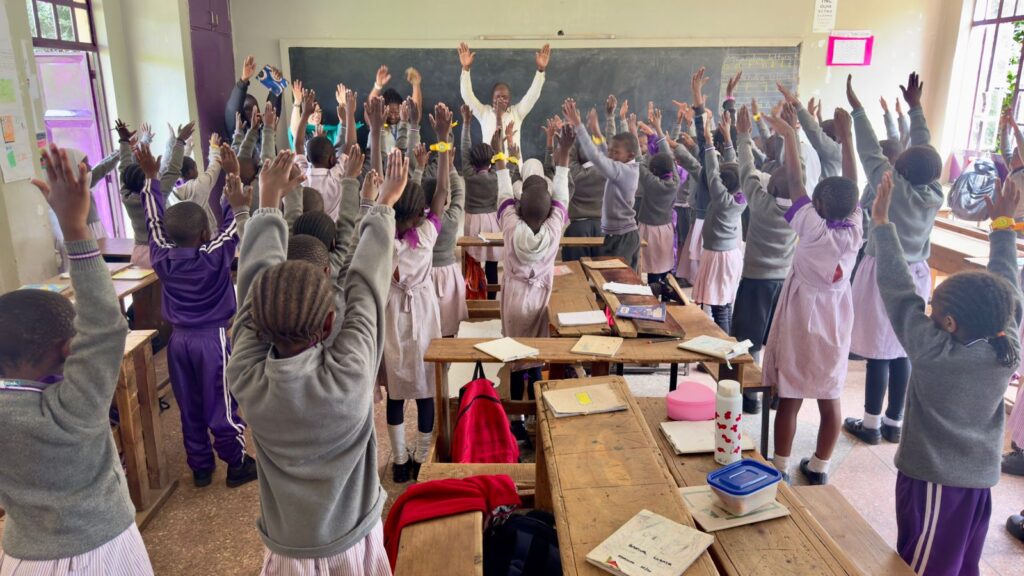
Daara Development Academy for Sub-Saharan African implementers of foundational learning We are facing a global learning crisis whereby millions of children are in school but are not learning at satisfactory levels. Learning outcomes within Sub-Saharan Africa are particularly dire, with 9/10 children not able to read with comprehension by 10 years of age (compared to 9/10 children in high-income countries). To improve the quality of education, a rigorous focus on teaching and learning is needed, combined with local contextual solutions, led by local implementers. The Daara Development Academy (Daara) aims to strengthen the capacity of local implementers within Sub-Saharan Africa, to champion and enhance their efforts in advancing learning outcomes at scale. The Program has been co-created by 11 organizations across Sub-Saharan Africa, coordinated by Better Purpose, and funded by the Gates Foundation. The Program has five primary learning goals which focus on the biggest barriers to each organization in achieving its strategic aims: Building pedagogical excellence – strengthening organizations’ understanding of the science of teaching and learning, how to effectively translate this into classroom practice and programming. Using and generating evidence – solidifying organizations’ approaches to leveraging data ensuring programming and impact is evidence-driven. Moving successfully to scale – supporting organizations to design programs for scale, to work effectively with government. Managing talent to build the organization – reinforcing organizations’ talent management strategies ensuring fit for organization and market. Strengthening fundraising capability – supporting organizations to enrich their understanding and engagement with the funder landscape. Learning will happen through study tours, expert lectures, workshops, conferences, coaching, consultancy support and technical assistance, with a focus on collaboration and peer learning amongst the cohort. The Program will also comprise of an Innovation Fund. This is a central fund designed for Daara Partners to propose and bid for collaborative projects seeking to improve FLN outcomes. Ultimately, Daara aims to better equip local Sub-Saharan African organizations to that they can lead the transformation of education for children in Africa, resulting in drastically improved learning outcomes. If the first cohort shows signs of success, it could continue for future cohorts, and we will be seeking a Sub-Saharan Africa based grant manager to take over the role from Better Purpose. If you would like to know more about Daara, its organizations or how you can support the Program, please get in touch with simi.otusanya@betterpurpose.co or rigobert.pambe@betterpurpose.co
- 1
- 2
 English
  French