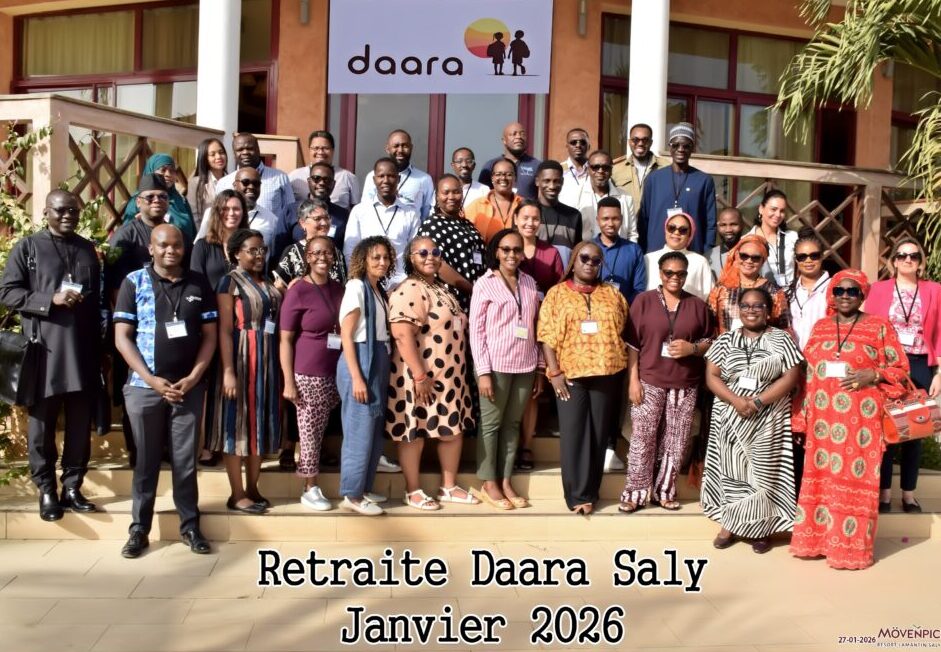
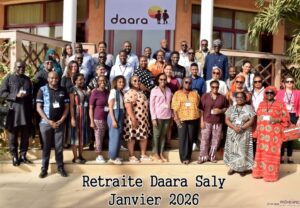
We recently concluded the Daara Year 2 Learning Retreat in Saly, Senegal, bringing together 33 partners from 16 organisations working to strengthen foundational literacy and numeracy across Sub-Saharan Africa. The retreat centred on a shared priority: how to support government-led education reform through cost-effective, scalable innovation. Through a panel discussion featuring Mr. Samba Gaye from the Senegalese Ministry of National Education, group working sessions, and classroom observations in schools across Fatick and Bambey, partners explored what it truly takes to collaborate effectively with governments to implement innovation at a national scale. Discussions underscored the importance of aligning with government-led reforms and co-designing solutions that can be endorsed, owned, and sustained by public institutions while remaining realistic in terms of cost, capacity, and long-term implementation. Participants shared candid reflections on both successes and challenges in NGO–government collaboration. Key enablers emerged consistently: clear governance structures, well-defined roles, strategic entry points, trust-based relationships, accountability, and strong leadership. One message stood out clearly: scaling innovative foundational learning programmes requires collaboration that is intentional, inclusive, and grounded in the realities of public education systems. No single actor can achieve this alone. Partners also drew inspiration from ARED and LARTES’ organisational journeys as our retreat co-hosts. In thoughtful conversations with Mamadou Ly, Awa Ka Dia and Abdou Sarr, participants reflected on how ARED’s leadership and programmatic approaches have evolved over time adapting to complexity, navigating change, and building the capabilities needed for sustained impact. Sessions also examined how both ARED and LARTES (represented by Prof. Rokhaya Cisse and Binta Rassouloula Aw) use evidence to inform policy and practice in close partnership with government. Their experiences highlighted the organisational and programmatic foundations that underpin durable collaboration with local and national authorities. The retreat further provided space to set shared priorities for 2026, reflect on Daara’s future direction, and award Innovation Fund grants to initiatives with strong potential for system-level impact. Ultimately, the retreat reaffirmed Daara’s commitment not only to fostering innovation, but to supporting partners to translate innovation into sustained, large-scale improvements in foundational learning outcomes through effective government collaboration. We extend our sincere thanks to ARED and LARTES for hosting us with such warmth and the true spirit of Teranga, to the Ministry of National Education of Senegal, and to the Gates Foundation, particularly Izzy Boggild-Jones and Clio Dintilhac, for their continued partnership and support. Together, these collaborations demonstrate what is possible when complementary actors align around a shared goal: improving foundational learning for all children. We look forward to the next retreat! GALLERY
Blogs
Leading from Behind: How Civil Society Organizations Can Strengthen Government-Led Education Reform
Author: Rachel Macharia What does it truly mean to lead? In the development sector, leadership [...]
Continue readingMar
Blogs
Lessons on Partnership and Patience: Reflections from the Daara Retreat
Author: Dr. Lydia Chege Listening to LARTES and ARED share lessons from more than 30 [...]
Continue readingFeb
News From Daara
Report on the latest Daara retreat in Saly, Senegal
We recently concluded the Daara Year 2 Learning Retreat in Saly, Senegal, bringing together 33 [...]
Continue readingFeb
Blogs
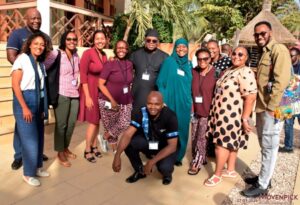
Notes from Saly: Ideas, Nerves, and Everything in Between
Author: Charlotte NdumeBase Africa “I went to Saly telling myself I was going to relax. This [...]
Continue readingFeb
News from Partners
QEDA Joined UKFIET 2025
The Quality Education Development Associates (QEDA) Team Lead/Founder Nurudeen Lawal, joined other 700 education sector [...]
Continue readingOct
Sep
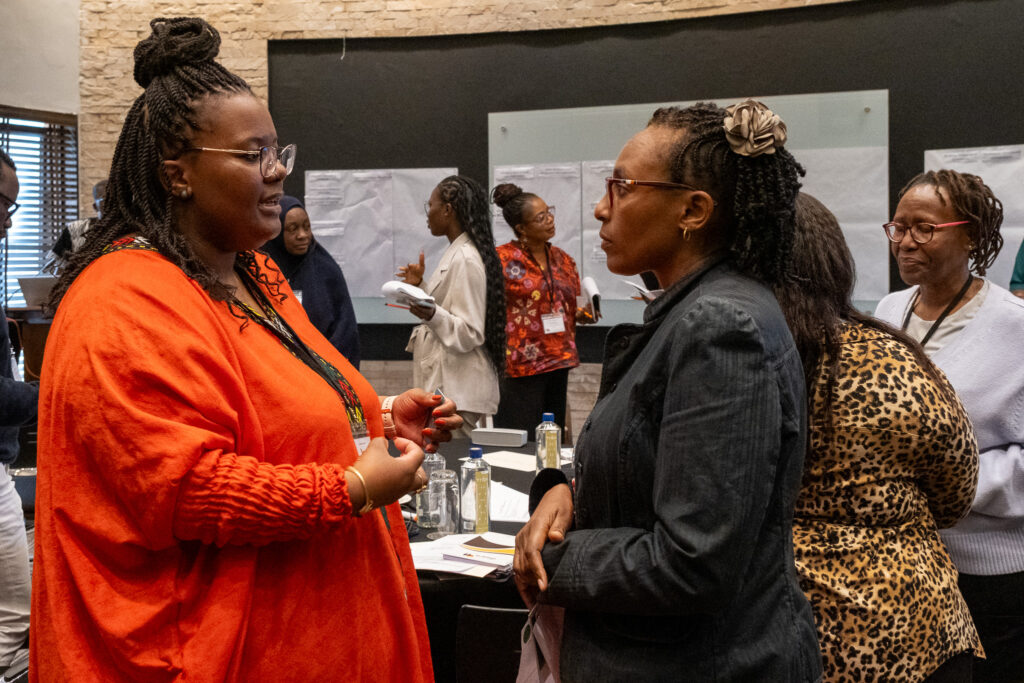
From 12 to 14 August 2025, fifteen outstanding organizations from across Africa came together in Nairobi for an in-person learning retreat of the Daara Development Academy. What united them was a bold vision: ensuring better education outcomes for all children, in every context. This gathering also marked a powerful step in building a stronger, more connected community of leaders dedicated to transforming education across Africa. Daara Learning Retreat in Nairobi: August 2025 Insights Over three days, participants strengthened bonds and deepened their sense of community, exchanged knowledge by sharing expertise, questioning assumptions, and learning from one another and built practical skills to measure impact and collaborate more effectively with governments. The retreat was further enriched by the voices of inspiring keynote speakers: Madame Ruth Kagia (Senior Education Advisor, Kenya), who emphasized the power of bold, system-level influence Professor Hellen Inyega (University of Nairobi), who shared insights on leading in times of change by fostering government partnerships for sustainability and scale Christine Harris-Van Keuren (Founder, Salt Analytics), who equipped organizations with practical tools to partner with governments for impact at scale In addition, participants worked with Better Purpose to strengthen their organizational impact systems. Feedback was overwhelmingly positive — they valued the hands-on skill-building in monitoring & evaluation and cost analysis, as well as the authentic relationships forged across the network. One participant summed it up perfectly: “The retreat shifted my mindset from seeing tools like M&E and cost analysis as internal reporting requirements to viewing them as strategic levers for engaging government partners and embedding our work into national education systems.” This initiative was made possible thanks to the generous support of the Global Education Team at the Gates Foundation. The retreat closed with participants leaving Nairobi inspired, better connected, and better equipped to make a difference — together.
News From Daara
One Project, A Million Lessons: My Journey of Growth and Grit as a Young Female Evaluator through the Daara Innovation Fund
Jul
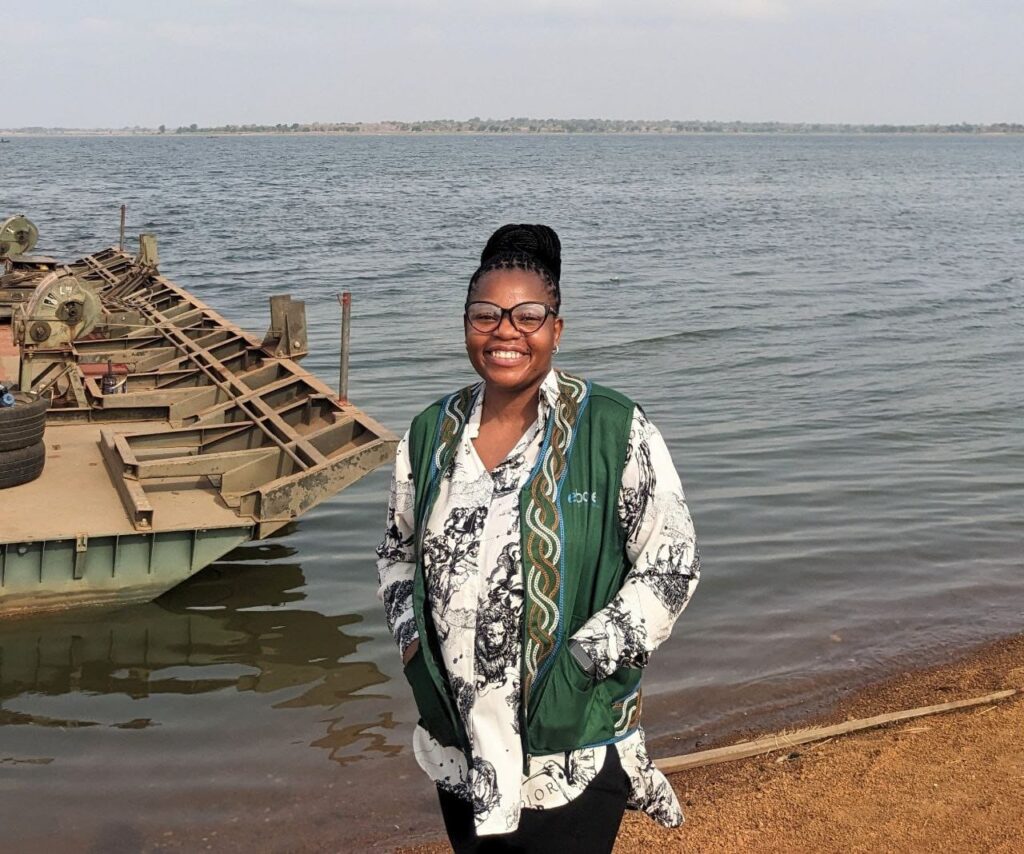
Some journeys begin with a checklist and a plan, mine began with a ferry, a pounding heart, and a silent prayer. I didn’t know fear until I found myself standing on a shaky pantoo (ferry), crossing the river from Kpando into Krachi in Ghana’s Oti Region. Beneath me, the water looked like it could swallow me, above me, the sun was doing the absolute most, and around me, everything was foreign, language, landscape, expectations. And within me? Panic. I was en route to supervise endline data collection for a project I had recently joined, and now, I was coordinating its entire evaluation. Three months in. It was both an opportunity and a serious responsibility. This was my first time leading an evaluation of this scale. Although I hadn’t been part of the project from inception, I was given the necessary support and entrusted with guiding the evaluation process for the AI Teachers Project, funded by the Daara Innovation Fund. The project, implemented by Lead for Ghana and Shule Direct in Tanzania, focused on improving foundational numeracy through an AI-driven assessment program, with eBASE Africa leading the evaluation. It was a huge learning curve, but also a chance to step up and contribute meaningfully. Getting up to speed required intentional effort. I immersed myself in understanding project goals, the theory of change, evaluation framework, tools, indicators, and datasets. I spent long hours reading through documentation, asking clarifying questions and reviewing past reports. While there were moments of uncertainty, I also found moments of clarity and deep insight that strengthened my confidence. I took every opportunity to learn and grow. One of my key responsibilities was refining our data collection tools. This went beyond form design, it required appreciating the nuances of education systems in Ghana and Tanzania, adapting tools to local contexts, and ensuring methodological rigor. I worked to align pre- and post-test tools with project outcomes and to ensure that indicators reflected meaningful learning changes. This experience taught me that evaluation isn’t about ticking boxes, it’s about asking the right questions and capturing insights that matter. Pictured, Charlotte with the Lead For Ghana Team and some Teachers on the field during Endline Data Collection Cross-country collaboration brought its own lessons. Coordinating between partners in Ghana and Tanzania, navigating different schedules, time zones, and education calendars required patience, strategy, and above all, clarity. I learned to communicate with precision. I learned how to schedule follow-ups without sounding pushy, how to facilitate meetings where every voice was heard, and how to respond when data didn’t come in as planned. There were moments of true frustration, when a partner misunderstood a tool, when data came in with missing values, when we had to revise timelines because of unforeseen field constraints. But I also started to see the big picture. I began to grasp how all these moving parts fit together. With each problem, I discovered new ways of thinking. I started anticipating issues before they happened. I created tracking templates, revised fieldwork guidance notes, and led internal review sessions with partners. I was becoming someone the team could rely on, not just to execute tasks, but to lead and adapt. One moment that stands out vividly is my visit to one of the pilot schools while in Ghana. I observed a teacher use the AI-powered feedback tool to adapt his lesson, based on learner performance. The precision with which he identified learning gaps was incredible. And what moved me most was his excitement when he realized it was effective. He said, “Now I can understand what my learners need, even before they speak it.” That moment stayed with me. It validated everything, the stress, the revisions, the back-and-forth. It reminded me that our work wasn’t theoretical. It had a real impact. This experience didn’t just enhance my technical skills, it reshaped the way I see myself and my role as a young evaluator. I developed a stronger analytical mindset. I now approach problems with more confidence, breaking them down into components and systematically thinking through solutions. My writing improved significantly. I learned how to frame findings for different audiences, donors, educators, community members, and how to strike the balance between technical depth and accessibility. I became more grounded in participatory approaches. I actively sought feedback from partners, reviewed translation protocols to ensure questions made sense in local languages,(case of Tanzania) and began to view data as a conversation rather than a transaction. I realized that evaluation is not about being the expert who arrives with answers, but about being the listener who asks the right questions. And yes, I made mistakes. There were tools I revised too many times. Reports that had to be redrafted. Graphs that didn’t quite tell the story. But each mistake was a lesson, and I was fortunate to have a team that encouraged growth, not perfection. Every challenge became an opportunity to refine my skills. By the end of the project, I could confidently design MERL frameworks, develop outcome and process indicators, and manage complex stakeholder dynamics. I have gone from a young woman unsure of her place in the project, to a young evaluator who can lead with purpose and clarity. As such, the DAARA Innovation Fund didn’t just fund an evaluation, it funded my transformation. It created space for a young African woman to step into leadership, to learn through doing, and to build competence through trial and reflection. It allowed me to sit in meetings I once felt unqualified for, and leave those meetings with clarity, action points, and, sometimes, even answers. A heartfelt thank you to my collaborators, Charles from Shule Direct, and Grace and Peter from Lead for Ghana, for making cross-country collaboration feel seamless, even when the road was anything but so. Yes, there were challenges and hiccups, but your professionalism made all the difference. To my colleagues working on other Daara Innovation Fund projects at eBASE, thank you for having my back. As the new girl navigating unfamiliar territory, your […]
News From Daara
What happens when African-rooted organisations come together to co-create solutions for foundational learning in Africa
May
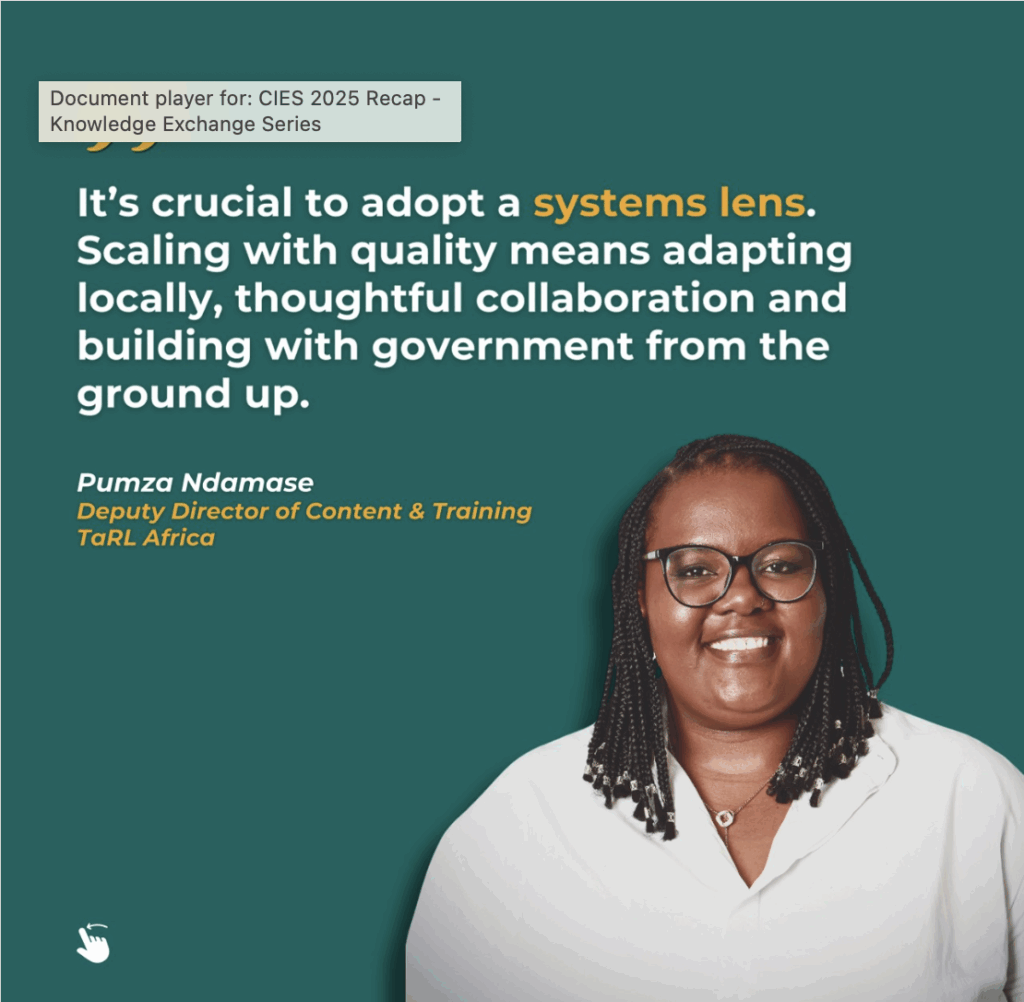
What happens when African-rooted organisations come together to co-create solutions for foundational learning? At hashtag #CIES2025, Pumza Ndamase shared reflections from an ongoing knowledge exchange between TaRL Africa, ARED, and Funda Wande – a collaboration spanning Nigeria, Côte d’Ivoire, Senegal, and South Africa. Solutions for Foundational Learning Together, we are learning what it really takes to localize instruction, strengthen teacher support, and scale with quality. The partnership centers African-grown innovations – from bilingual teaching practices to the use of low-cost, locally made materials, and tackles persistent challenges like large class sizes and absenteeism. This learning exchange was facilitated by an innovation grant for Daara Development Academy members, funded by the Gates Foundation. Source: https://www.linkedin.com/posts/tarl-africa_cies-2025-recap-knowledge-exchange-series-activity-7317901097325465600-9Vwy/